

Earlier this week, we drove down to Oregon to witness what was called the Great American Solar Eclipse. True to all the hype, it was a spectacular event. Growing up in India, it was considered a bad omen to be out and about, let alone look up, when the solar or for that matter lunar eclipse was in progress. Even so, I defied my parents wishes and watched the partial eclipse in India in 1998. While still an amazing experience, it was nothing in comparison to the total solar eclipse I got to see last week.
Having heard about the eclipse more than a year in advance, we booked a hotel in Newport Beach, Oregon. We were glad we did so that long ago. As we got closer to the d-day, if felt like the half the US drove into the town. Initially I was planning to take my telescope there to get some nice pictures of the eclipse but given my lack of expertise in setting up the telescope quickly, I decided to just take my camera.
We got down to our hotel over the weekend and scouted the parking lot the night before the eclipse. We thought we were all set for the eclipse in the morning when we saw the news about marine layer along the coast which might not clear before the eclipse. I was very upset that night. We were hoping that the weather clear up but based on the news, it did not seem likely.
Next morning, we woke up early had breakfast and kept an eye on the news and the weather but it did not seem to let up. Getting nervous and panicky, I decided to drive inland. We got in our car and started driving east, the visibility wasn’t very good due to the fog and the seemed to continue for miles inland.
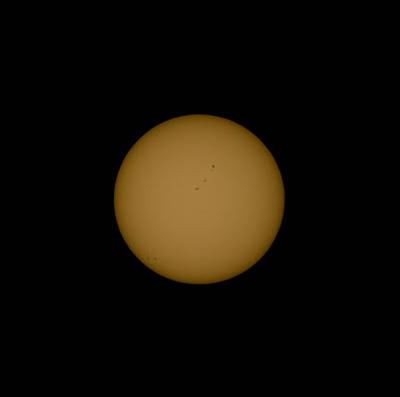
We were pressed for time as the eclipse was almost upon us but the fog and visibility were still very bad. We continued to drive for what seemed like ages without the fog letting up. Finally, 10 minutes prior to the eclipse, the fog cleared up and we found the closest open lot that was allowing for cars to camp and watch the eclipse. I quickly set up my camera on the tripod and got this beautiful shot.
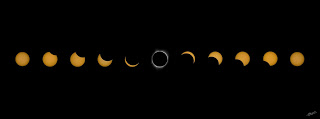
We stayed there for the entire duration of the eclipse and totality was a surreal experience to say the least. It was everything that everyone had described about total solar eclipse and more. I was able to capture this composite.
Our journey back home, well that can be another story in itself 🙂 What normally takes three and half hours took us close to eleven hours as everybody decided that they need to head back home right way. However, this was an experience of a life time! I am looking forward to the next total solar eclipse. I hope we have the means and opportunity to get there.

 astropilotdad.com