Skyguider Pro and Autoguiding

One of the challenges with my astrophotography set up is that its not portable. To be able to take photographs of Deep Sky Objects, I needed a set up that allows for autoguiding while still being portable enough to carry on airplanes. After a little bit of research back in 2022, I found a couple of mounts that I thought would meet my needs. Both were portable tracking mounts (tracking in RA only no DEC motor) that had capability to do autoguiding through ST4 port of the camera. Of the two (Skywatcher star adventurer and iOptron Skyguider Pro), I decided to go with iOptron mount as I had recently purchased another mount of theirs (GEM45) and was pretty satisfied with it. Ofcourse, only a month after I bought the tracking mount Sky Watcher comes out with a portable Star Adventurer GTi which has tracking both in RA and DEC making for better tracking, GoTo capability and pulse guiding through PHD. The mount was announced but was not available to be delivered until a couple of months if I recall correctly. I decided to hold on to the Skyguider Pro and make a decision at a later point if I want to trade-in the Skyguder Pro with Star Adventurer GTi. Only problem is, I never did. We were expecting out second baby so this mount was going to be used when we actually planned to make a trip which was not in the near future. The mount sat in the storage and I just sat on making the trading in decision. Now its too late to get a decent value from a brand new unused mount that is couple of years old when there are much better similar priced optinos in the market available. So I decided I will just use it and not focus on upgrading.

This past month I decided to test out the mount’s autoguiding capability now that my daughter is a year old we have been seriously thinking of starting travel (including camping). I thought testing should be quick and easy but boy was I wrong! We have had a good run of clear night skies in PNW so I set up the mount one night, polar aligned and then tried it with my camera and 70-300mm lens. I hoooked up the autoguider camera (ZWO ASI 120MMS) and guidescope (ZWO 30 f/4) and tried to autoguide with PHD2 with “on camera” as the mount option in the PHD2 setup. During calibration, PHD2 failed saying that there was little to no movement to the east. I tried looking at the cables, connections etc. to make sure if everything was connected right and there were no loose cables. Nope. Everything was connected fine. After fiddling with the equipment for an hour, I decided to give up. Assuming it might have been a faulty cable, I tried to set up the following night again but with different sets of cables. I switched to a ZWO ST4 cable and a different USB from camera to the laptop but no joy. After the second frustrating night, I decided to trouble shoot during the day time and not waste any of the clear nights trying to debug the issue. I used my regular telescope setup to actually gather photons from Deep Sky Objects for the next couple of nights.

To debug, I tried manual guiding by pointing the guide camera to a tiny stationary object during day time but the mount did not budge. With no other ideas on what could be wrong outside of either the wire or the ST4 port on the autogider or mount being broken, I reached out to iOptron for help. After a couple of back and forth emails, I learnt that it could be the ports are wired differently for the camera and the mount. When I looked up the pinouts for the camera and the mount, it was indeed different, although only the RA (left and right) pins were flipped. See below:

Skyguider Pro Guide Port Pinout: Source: https://www.ioptron.com/v/Manuals/3550_SkyGuiderPro_Manual.pdf
Camera Guider Port: Source: https://i.zwoastro.com/zwo-website/manuals/ZWO_ASI_Cameras_Software_Manual_EN(Windows).pdf

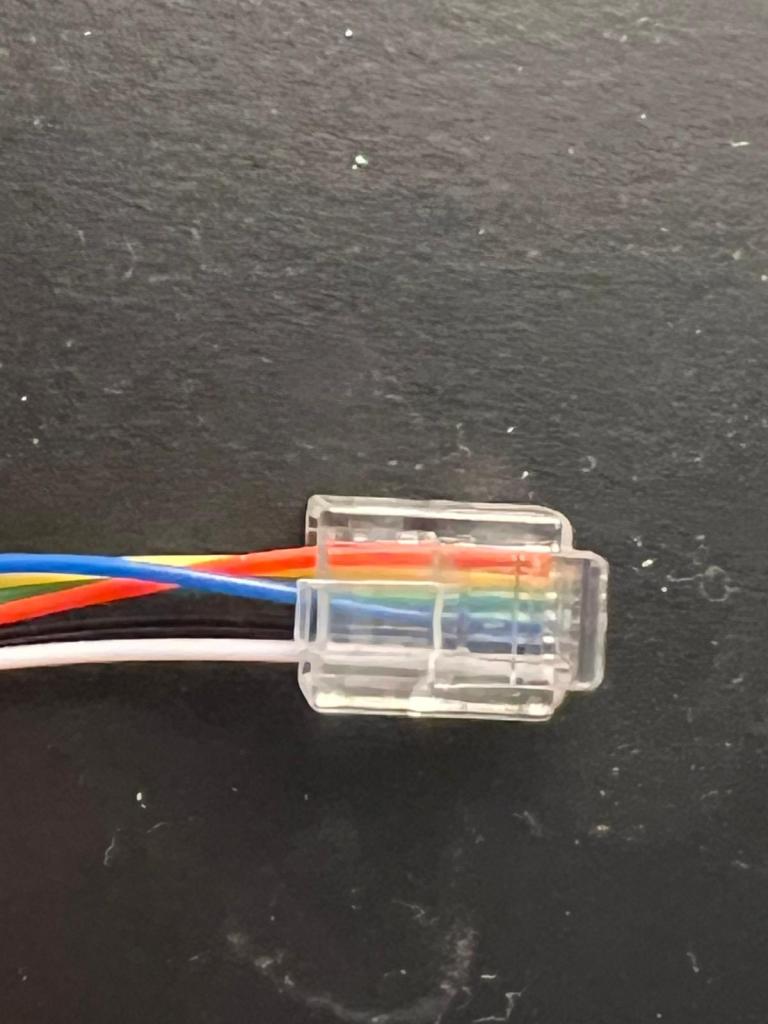
To test if this was the issue, I stripped the RJ11/12 wire flipped the 3rd and 6th and crimped a new RJ11/12 socket. I tested it out using the manual guiding method during the day time and was excited to see the mount move. At night, after the kids went to bed, I set up the mount again and launched autoguiding through PHD2. Calibration succeeded on first try and the mount was being autoguided by the camera. To see if I could get long exposures, I tried several 5 minute subs at 300mm and saw no star trails at all. Exciting times!. I now need to try the 600mm lens and test 5 minute exposures but for all practical purposes my “travel” set up is now ready to go. All we need to do is make some trips to places with lower light pollution to actually use my travel set up to get some DSOs.

Here is the image of the DIY ST4 cable:
Astronomy: Northern Lights

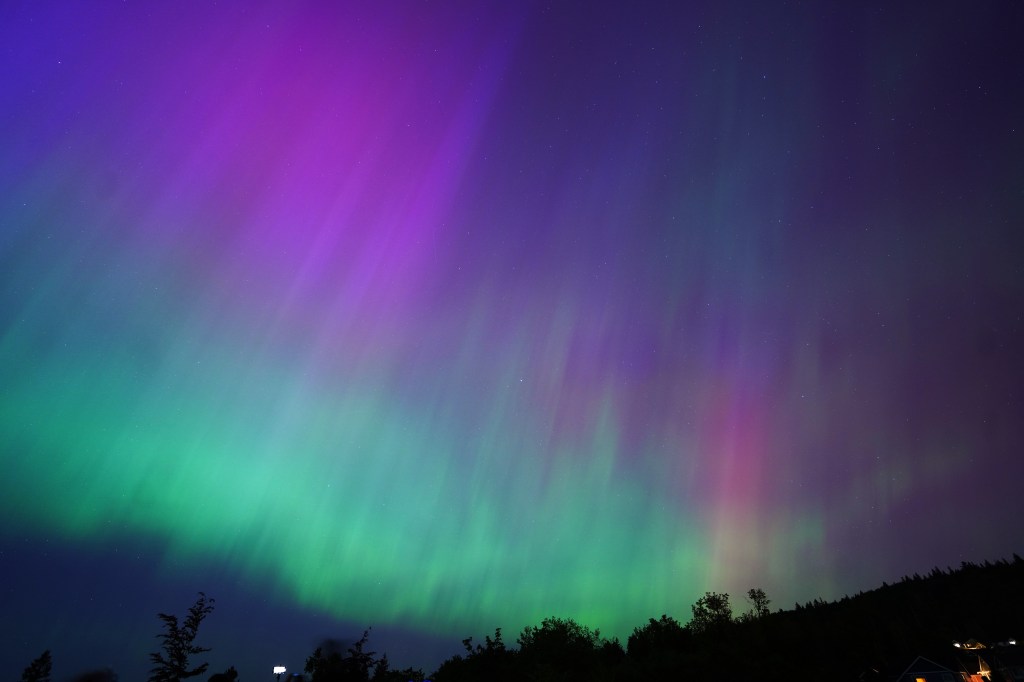
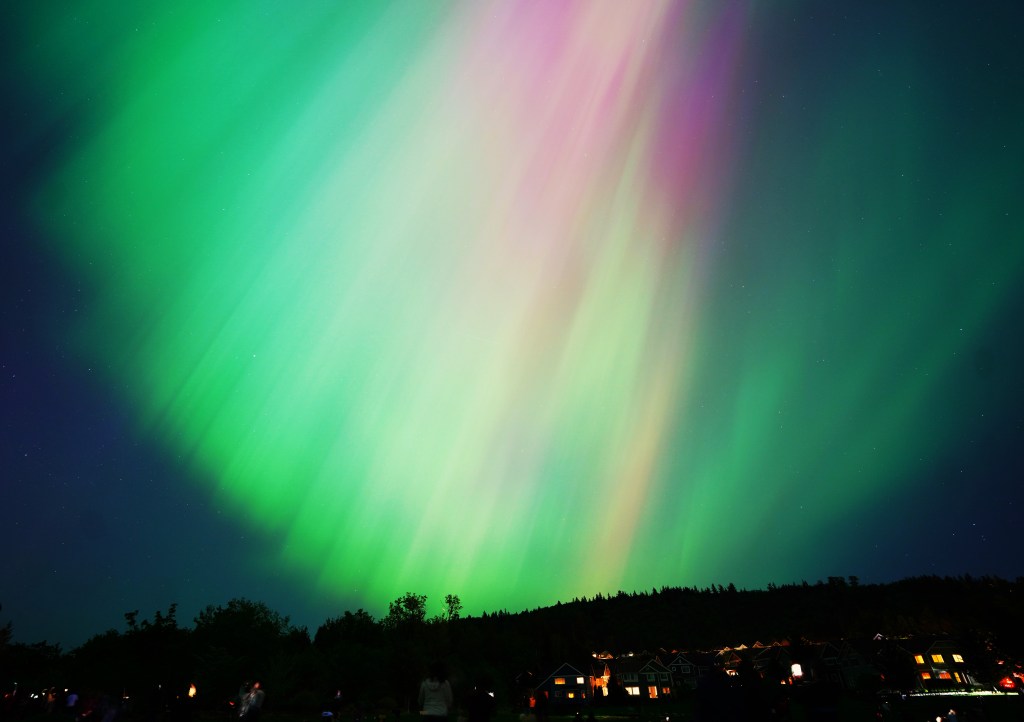
A major bucket list item for my wife and I that got checked off from my list (unfortunately, not my wife’s) was viewing the northern lights. We’ ve always wanted to go to iceland and view the northern lights, hopefully through those glass dome camping sites. However, with work, kids and other things going on in life, we never made plans. It was something we would do eventually. Since we moved to PNW, there were several ocassions when the suns activity resulted in aurora down to our latitudes, however, given the PNW weather all but once, it was clouded out. The one time it wasn’t clouded out, I ventured to a nearby park which was fully packed with people hoping to get a glimpse of the aurora but alas, we didn’t see anything. I took a few pictures that night and did capture some activity but it wasn’t visible to naked eye.

This past month though was a different story. It was a cloudless clear night. I ventured to the same park and took me 10 minutes to find a parking spot at 10pm at night. I found a spot far away from the road to avoid light from cars ruining the image and my night vision and immediately could see a faint wisp of what looked like clouds. I figured it was the aurora and took some pictures. It looked great in the camera. However, as my night vision adjusted and time passed on the activity only increased and i could clearly see the green and pink hues (although not as vivid as the camera captured them).

Everyone, including me, were awed by the brilliant display which at around 11pm at night peaked and exploded to cover almost the entire sky. It seemed to originate at the zenith and spread across the sky (mostly concentrated in East, North and West). The display was very dynamic chaning every few seconds and you could hear the oohs and aaahs from the crowd. It was Amazing! I spent another half hour looking at the sky, taking more pictures and headed back home.

I asked my wife to head out to the park right in front of our home to view the lights as it was clearly visible even with the light pollution around our house. However, she was too tired for the day and decided to try going the following day as the news reported that we should be seeing the activity all through the weekend. The following day she kept tabs on local social media groups to see if the activity was visbile for her to get out and check it out but, unfortunately, it wasnt. Well, all that means is the trip to Iceland is still on our bucket list of things to do. Hopefully, we will have the means and opportunity to go at some point in the future. We hope our kids have an interest as well and can appreciate this amazing celestial event!

Astronomy: Eclipse Chasing

Our first total solar eclipse experience was in Aug 2017, Prior to that, I have always wanted to view one and never got an opportunity. I had viewed a couple of partial solar eclpises but never got a chance to view totality. In 2017, that changed. I had planned a year ahead, booked a hotel and got a chance to view totality after a last minute panic because of marine layer over Newport Beach Oregon. That experience was surreal. It’s hard to explain in words so I won’t even attempt to do that. Needless to say, we planned ahead for the great eclipse of 2024. We traveled to what we thought would be an ideal place to watch the eclipse from – Austin, TX. We stayed at my buddy’s place whose amazing photography skills you can see below. Even though the totality was for a shorter duration here, we figured we could travel an hour away to get into the maximum totality.

We had booked our tickets to Austin more than 8 months in advance . We had planned it to be a week long vacation so that we could spend some time with my friends family and explore Austin as well. However, couple of days before travel, we shortened our trip as our daughter was recovering from a cold so we ended up going there for 4 days as opposed to 7. As we all now know, the weather forecast across texas was really bad and we had resigned to the fact that we may not be able to view the eclipse at all. Also, based on our past experience of 12 hour driving time back to Seattle area after viewing the eclipse in Newport beach, we decided it was not worth it to drive anywhere with two young kids for an eclipse that we may not be able to view because of the weather.

On the night before the eclipse the weather reports were all ominous saying that Ausin would have close to 87% cloud cover at the time of totality. Assuming the worst, we just decided to stay home and check out the eclipse if we were lucky at all. On the day off, it looked like we might not be able to see anything. The sun was behind the clouds most of the day, peeking out once in a while for a moment or two. Since we traveled all the way to Austin from PNW, we decided to go to a nearby park to atleast enjoy the atmosphere of the eclipse if not for the eclipse itself. We headed to a nearby park a little bit beofre totality and waited.

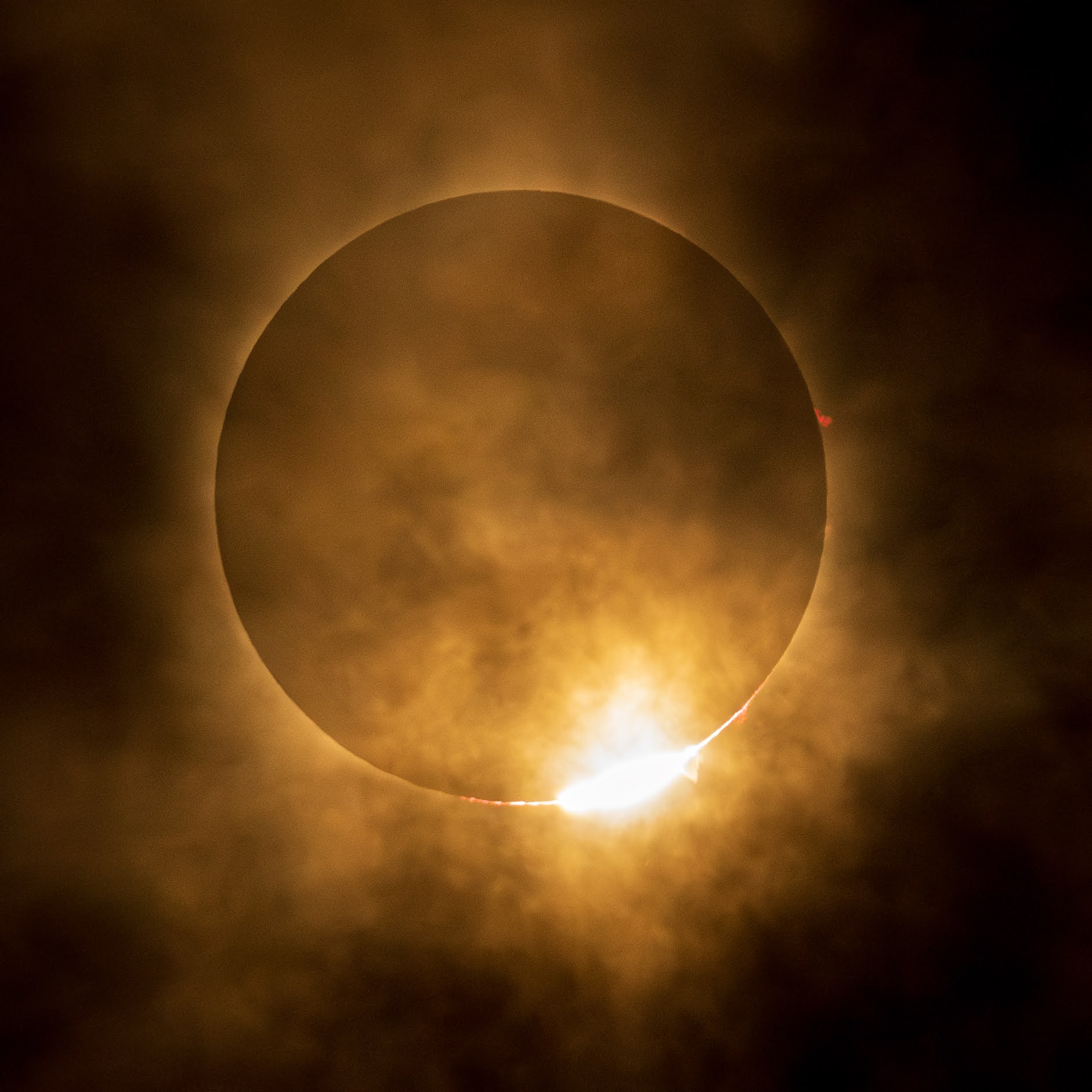
Amazingly, few minutes before totality, the clouds started clearing out and we were treated to a wonderful total solar eclipse! Although there were clouds rolling in an out as you can see in the first picture, it did not take away from the amazing experience.

When people tell me that they saw a 80% or 90% solar eclpise, to stress the magic of totality, I tell them,only half jokingly, that 0% totality is same as 99% totality for a solar eclipse. As you can probably tell, we are enamoured by this phenomenon and we hope to travel, when feasible, to wherever and whenver it occurs! We may be becoming some of those eclipse chasers you hear about in the media 🙂

Diamond ring. Photo courtesy @amanualjolt

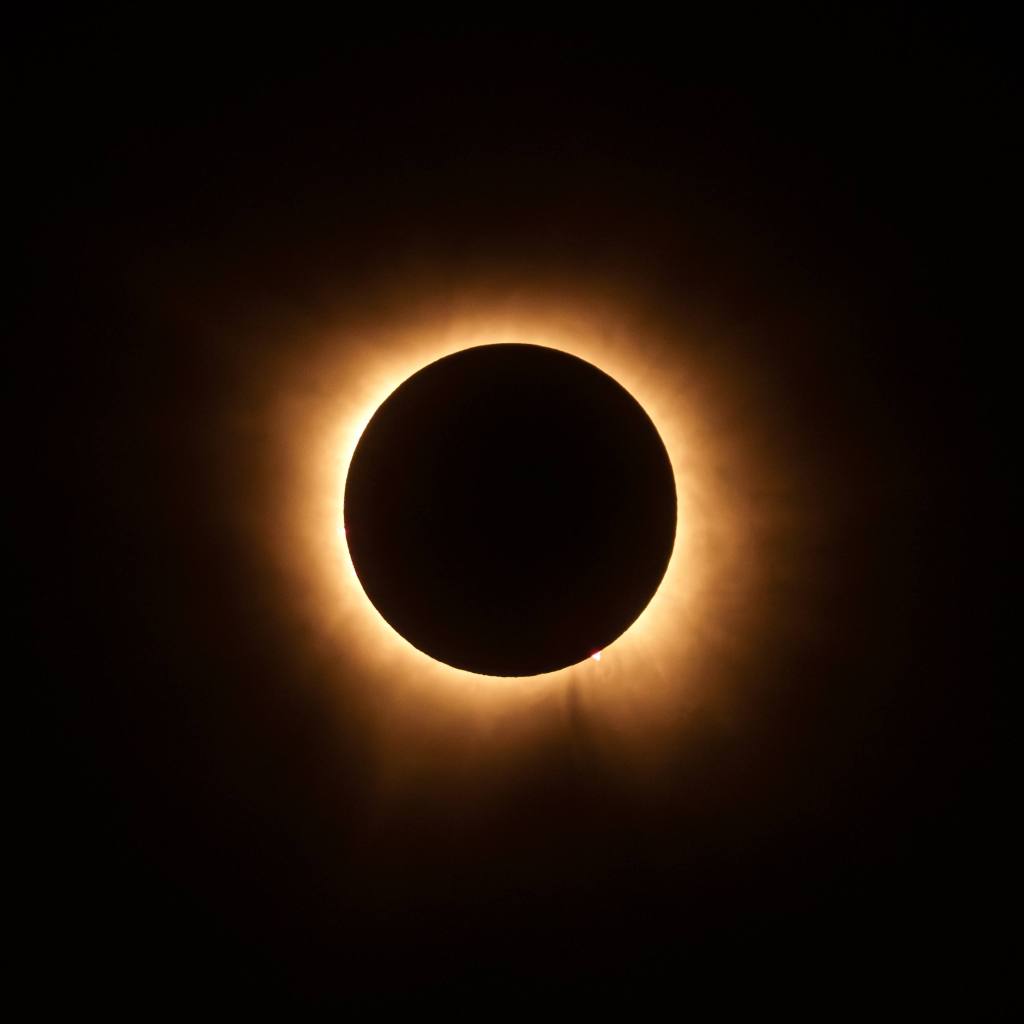
Here is another:

Totality in Austin,. TX. Phot courtesy @amanualjolt

Private Pilot: Flying in Phoenix, AZ

I’m in the process of catching up on posts and this one is from early November when we had gone to Arizona for a family wedding. It was a 4-5 day affair where we had a huge gathering to celebrate my nephew’s wedding. Since we hadn’t taken real time off in a while, we thought this would be an ideal time to take a vacation either before or after the wedding. My brother was flying in from California and we coordinated plans to stay a few more days after the wedding to do some local sight seeing – and may be drive up to Sedona.

With that in mind, I searched for and found a school that rented aircraft to non students. The school, like any other, had a checkout requirement which I scheduled for in the early days of my trip down there. That way, once I got my checkout, I could rent out the aircraft a couple of times in the 10 day period that we were planning to be there to do local sight seeing. I was even entertaining the idea of going up to Sedona one of the days knowing fully well that it had to be a day that wasn’t too hot as I did not want to deal with density altitude issues especially knowing that Sedona airport is at an elevation. However, given that this was early November, that problem was unlikely.

The day of checkout was in between two events during the day. Right after the first event, I took an Uber went to the flight school and had two hours of ground followed by a flight. The aircraft available at the flight school had 6 pack with vaccum guages while the ones in my local flight school have G3X and no vaccum guages. While not an issue, I like and have gotten used to the electronic display. The only challenge is the familiarity with the airspace. We covered that in our ground school but it obviously takes a bit of practise and reading up to make sure you are not encroaching into unauthorized airspace and understand the local visual landmarks that ATC, local pilots and students use. The other nuanced part of this area is that there are Class D airspaces just next to each other with a common boundary and there is a airforce base that sometimes may be active and not at other times. In addition the class D airspaces are under the Class B shelf so you have to keep track of that as well.

The checkout flight itself was uneventful and the CFI thought I did a good job and gave me a check out. I too enjoyed flying out in the phoenix area. The terrain and the view is very different from what I am used to in the pacific north west. The plan was for me to go back a couple of times to do some local sight seeing and like I mentioned before even go back to Sedona. However, my brother decided to cut back his vacation and head back early. My wife had a lot of office work pending on her plate so we also decided to head back early cutting our 8 day long vacation down to 4 days. I do intend to go back down there and get current with the school to rent an aircraft and fly out to Sedona. Hopefully sometime soon!

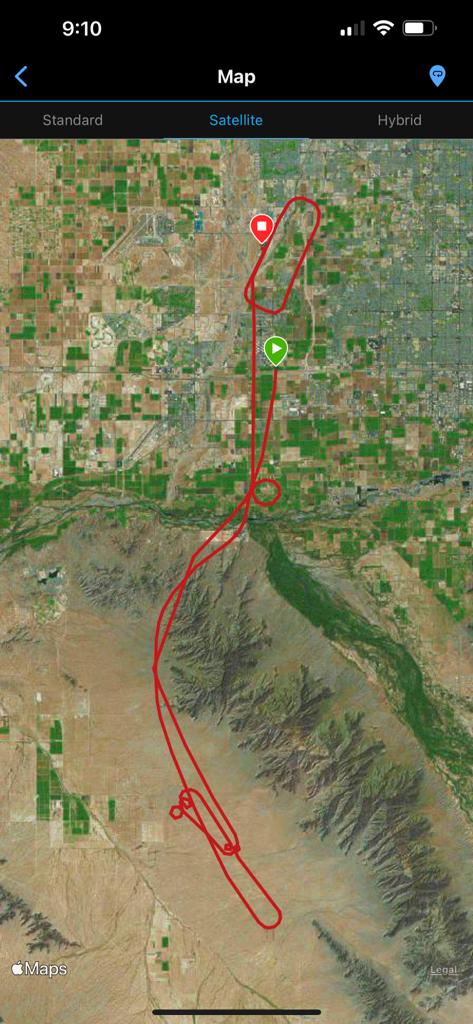
Here is the track of my flight. The practice area is a vast open flat land just south of the mountains!

Private Pilot: Long Cross Country

It’s been a loong time since I last posted. Things have been slow at work, home and hobby front so not much to report. The PNW weather, as usual, has been not ideal for my hobbies. While things have been slow on hobby front, we did have a little bit of travel that has kept us going through the gray winter. First, there was a family wedding at the beggning of November in Arizona. It was wonderful not only because we were able to meet with family after such a long time and partake in a week long wedding celebration but also because the weather was wonderful. Second, we made a short trip down to San Diego for the christmas break. While the gray skies followed us there, it was neverthless a nice break. While in Arizona, I also got checked out to fly C172 from a local flight school. The details of which, I will cover in another post. This post, however, focuses on long cross country requirement for my Instrument rating which I was able to sneak in during the thanksgiving weekend where we had unusually good weather for a day!

My long cross country was from Paine Field airport down to Hilsboro Oregon with a missed approach on the way back at Olympia airport. The day was interesting with a lot of learnings. First, we delayed the start of our flight by an hour because the TAF for Olympia had clouds at 1000 ft. The rest of the route had clear skies or very high clouds. We were unsure if it was low level fog with relatively low tops or a cloud layer that extended up to the altitude we were supposed to fly. During summer, that wouldn’t be a problem but the freezing level during this time of the year is very low. In fact, it was about 1000 ft on that day so going into the clouds was out of question. The forecast was getting better with each TAF so we thought it’s probably fog that should burn off soon. We figured that we will start the flight and in the worst case scenario, go around or turn back. Luckily we did not have to do either. I filed the IFR plan, preflighted the plane and started the run up and requested clearance. However, tower said that they do not have my flight plan. Apparently, my plan was not approved by flight service. I’m not sure what happened but one lesson learnt is to wait for a confirmation email that the flight plan was accepted before getting on the plane.

My CFII filed a new plan and they accepted it but when I got my clearance, they had given a different route than what we had filed. There was an interesting waypoint that ATC assigned us – If I recall it correctly, it was 20NM on the 178 radial from the SEA VOR. While I noted it accurately, and read-it back to the controller, I had to clarify with my CFII on how to identify it on the charts. He showed it to me on GTN650 by creating a user waypoint. I also learnt that, in Garmin pilot, when you go to add a new user way point in the settings menu, there is an option is to define it by Radial/Distance from a specific VOR. After adding the way point, I updated my flight plan and loaded and from then on it was a pretty smooth ride for the entire 4 and half hour 430 mile journey. The CFII I flew with was not my regular CFI who I had grown comfortable with and let’s just say this CFII has some quirks that make for an interesting ride 🙂 . Don’t get me wrong he is a pretty good CFII, I think its just that his style of training is much different from my regular one who I really love to train with.

Anyway, overall it was a pretty good cross country flight. The one key thing that I learnt I need to improve on is my ability to switch between flying with the instruments and working with my EFB (electronic flight bag) by reducing my time with my iPad/Garmin pilot app so that I don’t deviate beyond the allowable limits for altitute and heading. By the end of the flight, I was pretty exhausted more so from wearing the hood than the actual flying and needed a nice restful afternoon to recover. I’m glad that I was able to get the long cross country out of the way and complete my flight requirements for instrument rating. Now the only hurdles (although, pretty big ones) keeping me from my rating are written and checkride. Although, I think I will need a whole lot of flying practice before I take my check ride but to do that I need to get my written out of the way…. just need to find time to study. Hopefully soon… May be I should be focusing on studying rather than blogging? Well, I have not been giving attention to the blog as well, so … ¯\_(ツ)_/¯

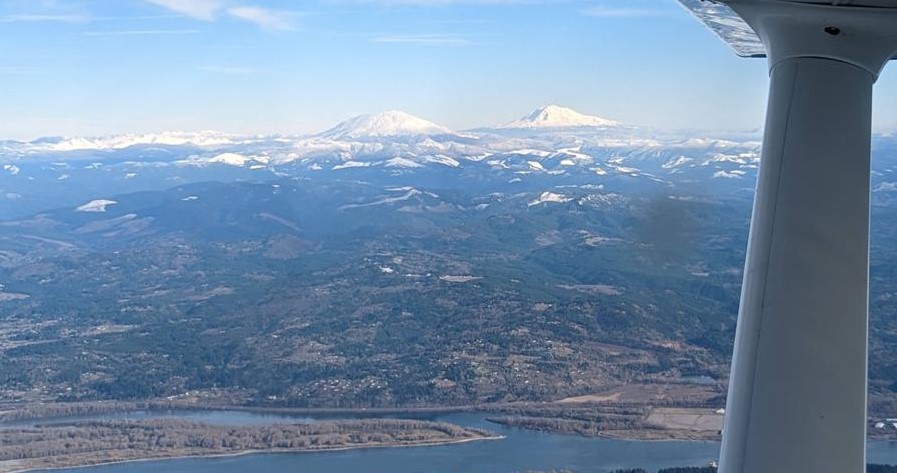
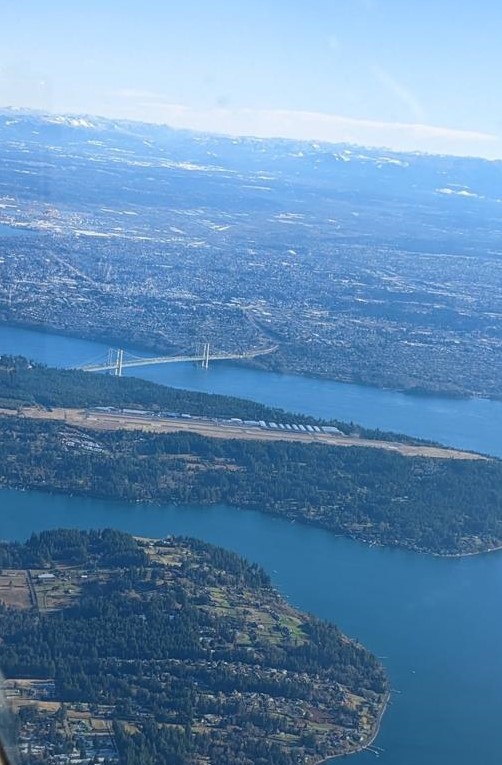
While I procrastinate on everything, why don’t I leave you with some pictures from my flight and the flight path as recorded by Garmin