

After two months, there was a clear night in the Pacific NorthWest. Naturally, I decided to set up my telescope and get some pictures. I wanted to capture some real data to process and publish so did not tinker with my setup. Since it is galaxy season right now and between the mirrorless and CCD camera, the CCD set up was tried and tested, so I decided to use it. After putting my son to sleep, at around 8pm, I set up my camera, polar aligned it and got the imaging camera in focus. Problem started when I was looking to get my guide camera in focus. The camera wasn’t taking a picture and returning this error: [ERROR] GetQHYCCDSingleFrame error (-1)
I tried rebooting my Raspberry Pi and switching the USB ports but still the same error. I had recalled that earlier i had to download the latest SDK to make my QHY camera work. I tried that as well but with no luck. At that point I decided that instead of trying to debug the issue, I would rather capture some data. Without autoguiding, I couldn’t expect to get pinpoint stars with more than 30 second exposure but that would mean I wouldn’t get any sort of details of the galaxy arms. Even so, I just wanted to be able to capture some deep sky object. The target was M51 (Whirlpool Galaxy) and plate solving (which I had a bit of trouble getting remote solver to get going) placed smack in the middle of my frame. I started shooting 30 second subs and luckily there was no trailing. I could have bumped up the sub duration but I did not want to try it then. I took around 60 subs plate solving every 10 or so subs to make sure the object was in the center of my frame. I could have continued taking more pictures but I prefer at least 3 minute subs so checked the weather for the following night – “mostly clear” and decided that I will debug the problem during the day and set up the following night and hopefully get some useful data. I took around 10 darks and called it a night around midnight. I’m still figuring out the issue with the QHY camera and will write about it in a subsequent post but for now, here is what I captured:
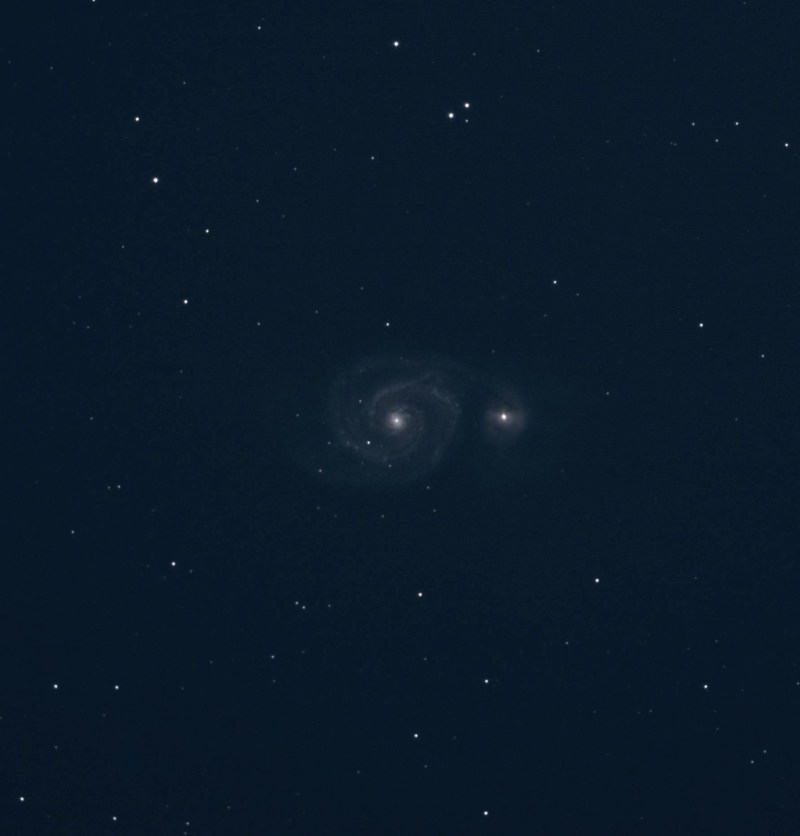
This is a stack of 60 30 second subs and 10 30 second darks with just some stretching and no post processing. I still have a long way to go for getting a great print worthy astrophotograph but I think the night was not a total bust. One thing astrophotography will teach you is to be patient :). I have been at it for more than a year now but don’t think I have one photography that I can call great. I have, however, learnt a whole lot in this past one year and hoping that my efforts at documenting my journey will be helpful to folks who are just taking this hobby up.
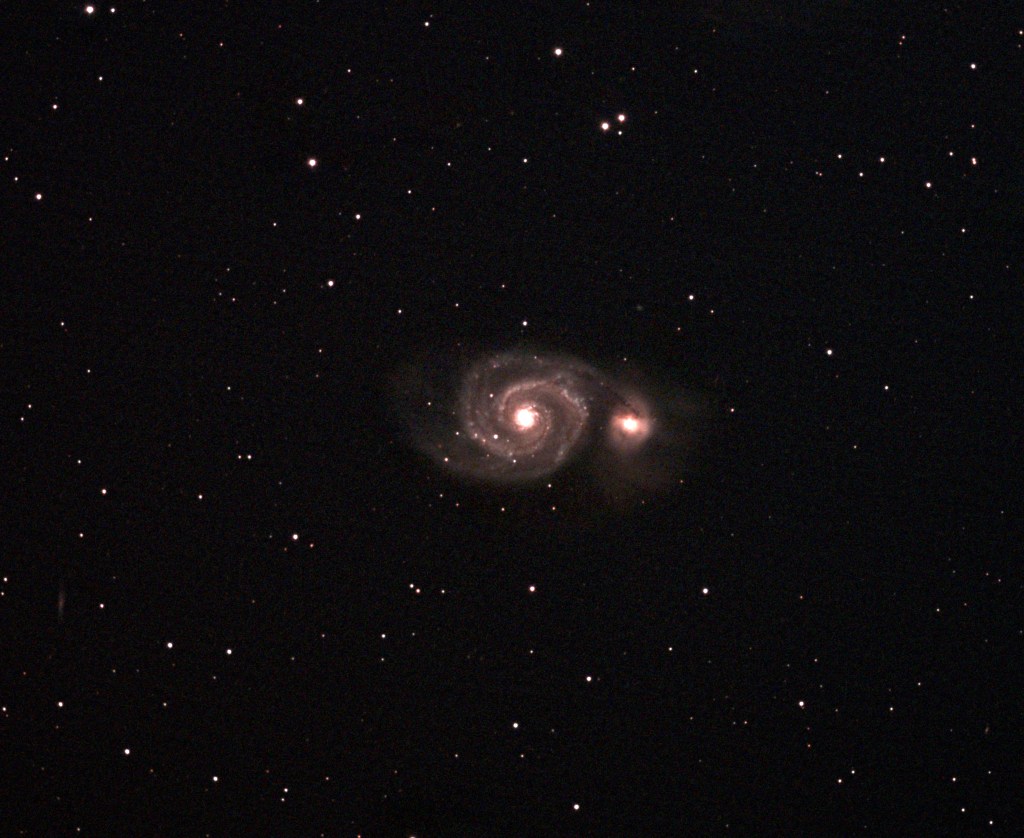
[Edit]: Here is a post processed version of the image. After the initial stretching, I tried to get rid of some light pollution. I still have a long way to go in terms of learning how to post process but for such a short integration time, I don’t think the image is half as bad. What do you think?
 astropilotdad.com
One thought on “Astronomy: The night was a bust, well almost!”